

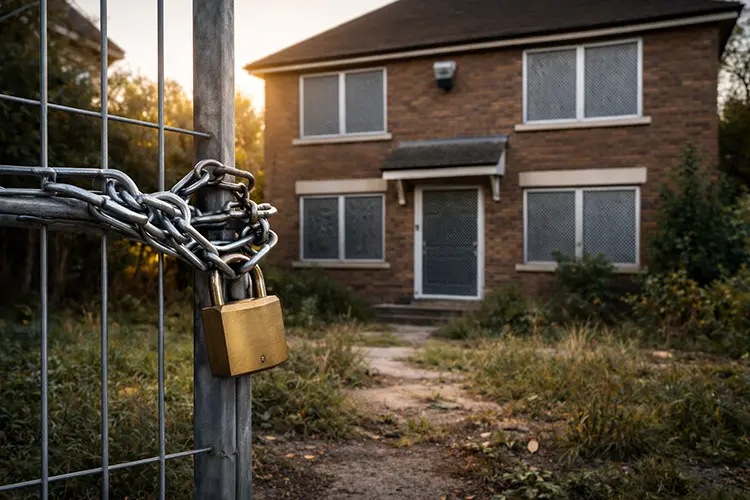
Vacant periods are part of property investment. Whether you’re between tenants, refurbishing, or preparing for sale, every landlord will face voids at some point.
What many landlords don’t realise is that the moment a property becomes vacant, the risk profile changes, and insurance expectations change with it. Without the right precautions, even a short void can lead to rejected claims, costly repairs, or long-term loss of value.
This guide explains how to secure a vacant property properly, avoid common mistakes, and stay fully insured during void periods.
When a tenant leaves, a property loses its biggest protection, daily human presence.
Vacant rentals are more vulnerable to:
Insurers know this, which is why standard landlord policies often restrict cover once a property is empty.
Related article: The real cost of leaving a property vacant
Most landlord policies class a property as unoccupied after 30 days, and some restrict cover earlier.
Once a property is classed as vacant, insurers often require:
If you don’t comply, you risk:
Related article: What you need to know about vacant property insurance
1) Assuming a short void isn’t a risk
Even a two-week gap can be enough for squatters to gain access, pipes to freeze, or vandalism to occur.
2) Not logging inspections
A quick drive-by check doesn’t count. Insurers expect timestamped evidence, internal checks, and written logs.
3) Turning off utilities incorrectly
Shutting off heating to save money can invalidate water damage claims.
4) Relying on basic locks or boarding
Plywood boarding and standard locks are often not insurance approved.
5) Failing to act after a break-in
Once a property is targeted, insurers expect immediate security upgrades.
✔ 1. Notify your insurer or broker
Confirm your void period limits, inspection frequency, and security requirements.
✔ 2. Secure all access points
At minimum, use reinforced door locks, steel security screens where required, and secure rear and side access.
Related article: Steel screens & physical security explained
✔ 3. Implement regular, logged inspections
Most insurers require inspections every 7 to 14 days for residential voids. Include water and heating checks, signs of forced entry, and any waste or fire hazards. Capture photo evidence.
📌 Keep records for at least 12 months.
✔ 4. Manage utilities properly
Options include maintaining low-level heating, professionally isolating water supplies, and using temperature sensors to prevent freezing.
Related article: Environmental monitoring for your vacant property
✔ 5. Add active deterrence where risk is higher
For longer voids or higher-risk areas, consider monitored alarms, CCTV, and remote monitoring.
Vacant residential properties attract squatters, especially if they look unmanaged. Once squatters enter, eviction can take time, damage is common, and insurance cover may be affected. Prevention costs far less than removal.
Related article: Squatter prevention
Short-term voids, under 30 days
Long-term voids, 30 days and over
The longer the void, the more insurers expect active risk management.
| Scenario | Typical cost |
| Weekly inspections | £20 to £60 per month |
| Steel security screens | From £300 to £800 |
| Monitoring | £50 to £200 per month |
| Burst pipe claim | £10,000 to £50,000+ |
| Squatter eviction | £5,000 to £25,000+ |
📌 One avoided incident can cover years of security costs.
Vacant periods aren’t a break from responsibility. They’re a higher-risk phase of ownership. Landlords who manage voids proactively maintain insurance cover, protect property value, avoid legal disputes, and re-let faster with fewer repairs.
We support landlords with:
Get a landlord security quote today, contact us

Head Office
18-20 Millbrook Road East,
Southampton, Hampshire, SO15 1HY
Tel: 0800 799 9800
Email: info@veritech-security.com
Hours: Monday - Sunday: Open 24 Hours

© 2026 Veritech Security is a trading name of Veritech Systems Limited | Company Registration No. 07095234 | Social Responsibility Policy | Sitemap | Privacy Policy | Policies and Procedures | Veritech Systems Limited holds SIA approved contractor status for Security Guarding, CCTV and Keyholding security services.
Simply complete our quick survey below
