

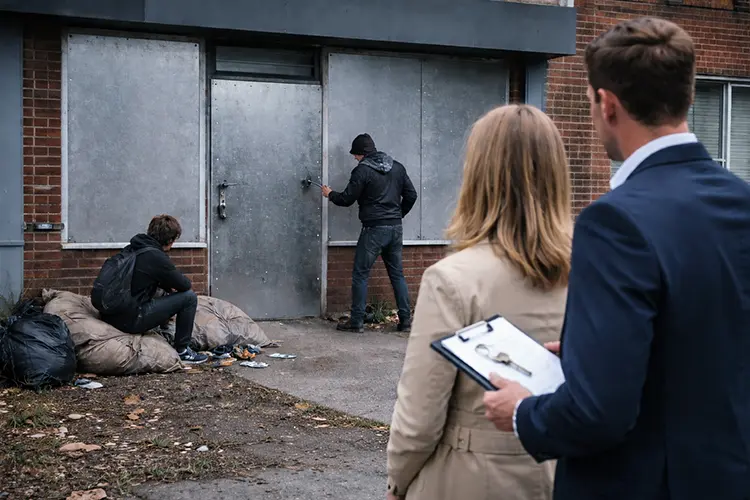
Squatting is more than an inconvenience. For owners, it can lead to legal costs, reputational damage, major repair bills, insurance complications, and months of lost value.
The biggest misconception is that squatters can simply be “thrown out.” In many situations, the law protects illegal occupiers until a lawful eviction has been carried out.
This guide explains what counts as squatting, how UK law differs between residential and commercial vacant buildings, and how to prevent costly occupation before it starts.
A person is squatting if they:
Squatting is not the same as trespassing. Trespass may be a short, unauthorised visit, for example someone wandering onto land. Squatting means ongoing occupation, and the law treats it much more seriously.
There is a crucial distinction:
This includes people:
These cases fall under civil eviction, not squatting legislation, and they require different legal steps.
Since 2012, squatting in residential buildings in England and Wales is a criminal offence. The police can:
The law applies to:
| Type of Building | Covered? |
| Houses & Flats | ✔ Yes |
| Residential Blocks | ✔ Yes |
| Residential Sections of Mixed Use | ✔ Yes |
| Holiday Homes | ✔ Yes |
| Care Homes | ✔ Yes |
Police will not act if:
These cases require civil eviction.
Related reading: “Vacant Property Security for Landlords”
This is where many owners are caught out:
It is not usually a criminal offence to squat in commercial property.
Police often refuse to act because it is a civil dispute, even if a break-in occurred.
Even then, eviction typically requires a court order. This can take days or weeks.
Related article: “Securing Empty Commercial Units”
If the building is residential
Note: Land and open spaces follow commercial eviction rules.
Eviction is only part of the financial impact. Typical losses from a 4 to 8 week occupation:
| Cost Type | Estimated Loss |
| Legal fees | £2,000–£8,000 |
| Clean-up & waste removal | £500–£5,000 |
| Damage & reinstatement | £2,000–£25,000+ |
| Insurance premium increases | £500–£3,000/year |
| Lost rental income | £1,000–£15,000+ |
| Temporary security post-eviction | £500–£3,000 |
Total: £6,500 to £54,000+
Large commercial sites can exceed six figures.
Many owners do not realise this: if squatters injure themselves on unsafe premises, you may still be liable unless you took reasonable security measures.
Forget the idea that “it is their fault for breaking in.” Courts look at whether an owner failed to secure a foreseeable hazard.
Insurers may refuse claims if:
See: “Insurance Requirements for Vacant Properties: What Your Policy Really Expects”
| Entry Method | Prevention |
| Forced window/door | Steel security screens |
| Rooftop entry | Anti-climb measures, roof alarms |
| Back service doors | Reinforced door plates, padlocks |
| Broken locks | Access control with steel-reinforced doors |
| Open land access | Perimeter fencing, CCTV towers |
Blocking only the front door is not enough. Squatters often enter from the least visible side of the building.
Related article: Steel Screens Explained
Squatting laws protect buildings and people. Owners who rely on “common sense” instead of compliance often face avoidable court delays, rejected insurance claims, long-term damage, and bad publicity, especially for public buildings.
Security is not only about keeping people out. It is also about proving you did everything reasonably expected to protect your asset.
We provide legally compliant protection for residential, commercial, and public-sector assets, including:

Head Office
18-20 Millbrook Road East,
Southampton, Hampshire, SO15 1HY
Tel: 0800 799 9800
Email: info@veritech-security.com
Hours: Monday - Sunday: Open 24 Hours

Simply complete our quick survey below
