

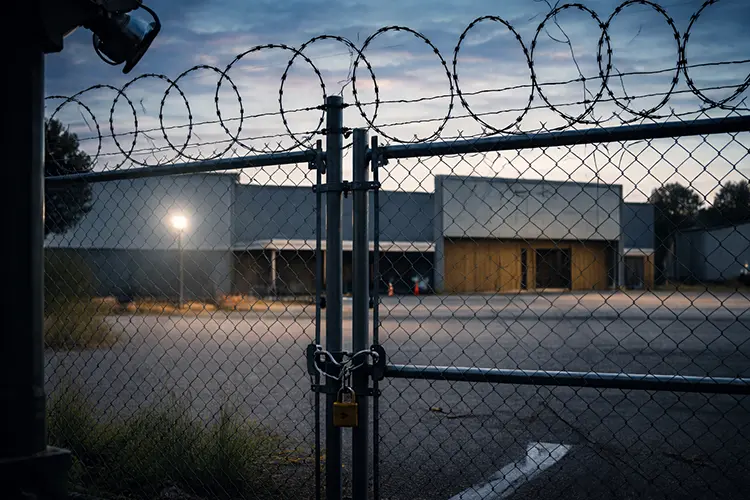
When a commercial unit becomes vacant, whether a high-street shop, office block, warehouse, or industrial yard, the risks increase immediately. Unlike residential properties, commercial sites often contain high-value infrastructure, cover larger areas, and attract organised criminal activity.
Insurers also apply stricter conditions to empty commercial properties. If you miss those conditions, claims can be reduced or rejected.
This guide explains the risks specific to empty commercial units and the most effective ways to secure them while protecting insurance cover and asset value.
Vacant commercial buildings attract criminals because they often have:
Minimal immediate consequences for intruders
Criminals assume that if a business has closed, no one is watching. That mindset turns trespass into theft, vandalism, and long-term damage.
One of the biggest risks to vacant units is metal theft, including copper pipework, electrical cabling, roof lead, radiators and boilers, and HVAC systems.This type of theft often causes more damage than the value of the metal. It disables utilities, forces full system replacements, and invites insurer scrutiny.
Related article: Cost of vacant property damage
Commercial buildings frequently house air conditioning units, industrial chillers, and plant-room equipment. These assets are expensive and often located externally or in lightly secured rooms. A single incident can cost tens of thousands of pounds, plus extended downtime before re-letting.
Vacant retail units and warehouses are common targets for forced rear entry, smash-and-grab vandalism, deliberate fire setting, and graffiti. Even minor vandalism can devalue the asset, delay re-letting, and trigger insurer demands for upgrades.
Commercial squatting is usually a civil matter, so eviction can take time and money. During occupation, owners may face damaged utilities, health and safety risks, liability exposure, and significant clean-up and reinstatement costs.
Related article: Squatter prevention in vacant properties
Many commercial units include service yards, loading bays, car parks, and external storage. These areas are prime targets for vehicle theft, fuel siphoning, machinery removal, and fly-tipping.
Related article: Remote property risks
Commercial insurers are stricter than residential providers. They often require:
Failure to comply can lead to partial or total claim rejection.
Steel screens protect ground-floor glazing, rear and service entrances, and vulnerable side elevations. Insurers prefer steel to timber boarding, and it resists forced entry far more effectively.
For large footprints or open yards, CCTV towers provide elevated coverage, live monitoring, audio warnings, and evidence-led police response. They’re particularly effective for warehouses, industrial estates, and distribution hubs.
Related article: Temporary CCTV towers vs security guards
Mobile patrols help you satisfy inspection clauses, spot early damage, support remote monitoring, and provide documented evidence for insurers.
Related article: Mobile security patrols vs static guards
Complex pipework and plant rooms benefit from sensors that detect leaks, freezing conditions, smoke and heat, and power failures.
Related article: Environmental monitoring for void properties
Strengthen external areas with vehicle barriers and gates, anti-climb fencing, motion detection, and controlled access points.
Prioritise front and rear access control, glazing protection, and high-visibility deterrents.
Secure multiple floors and access points, protect plant rooms, and use internal monitoring.
Cover large footprints with yard and loading-bay security, and take steps to prevent metal theft.
Expect changing layouts and temporary access needs. Plan phased security upgrades that align with each project stage.
Related article: Site security during redevelopment phases
| Cost Item | Typical Range |
| CCTV tower | £800–£2,000 per month |
| Steel screens | £500–£2,000 |
| Patrols | £300–£1,200 per month |
| Metal theft incident | £10,000–£100,000+ |
| Squatter eviction | £5,000–£30,000+ |
📌 Preventative security is consistently cheaper than recovery.
Empty commercial units should be managed as active risk environments, not dormant assets. Owners who plan early protect capital value, maintain insurability, reduce downtime, and improve re-letting prospects.
We support commercial landlords and agents with:
Request a commercial security assessment, contact us

Head Office
18-20 Millbrook Road East,
Southampton, Hampshire, SO15 1HY
Tel: 0800 799 9800
Email: info@veritech-security.com
Hours: Monday - Sunday: Open 24 Hours

Simply complete our quick survey below
