

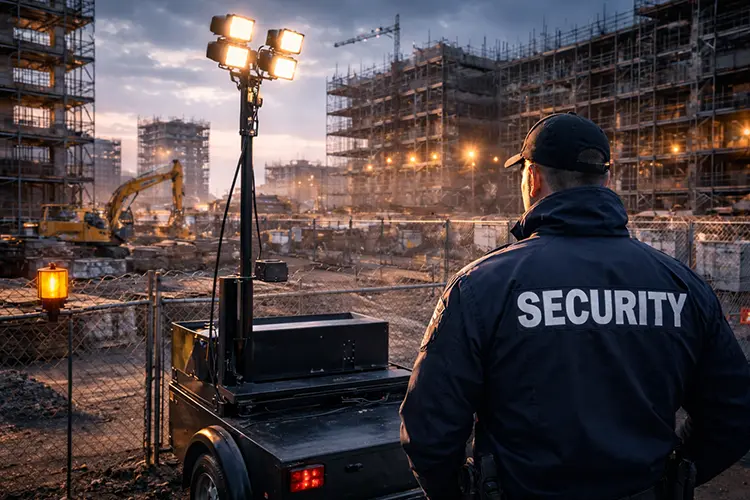
Security During Redevelopment: How Developers Protect Sites Between Phases

Security-During-Redevelopment

Redevelopment projects rarely move in a straight line. Between demolition, planning approval, construction, and final handover, sites can sit partially or fully vacant, sometimes for months.

These in-between phases carry heightened risk, yet they’re often overlooked in security planning. Insurers, funders, and local authorities treat them as high-risk periods.

This guide explains how developers protect sites during

Why Redevelopment Sites Are Especially Vulnerable

Redevelopment sites combine the risks of:

  • Vacant buildings
  • Construction sites
  • Open land
  • High-value materials and plant

At the same time, they often face:

  • Reduced on-site staff
  • Changing layouts
  • Temporary access routes
  • Partially removed utilities
  • Incomplete physical barriers

Criminals know these sites are in flux and target them accordingly.

The Redevelopment Risk Timeline

Security requirements change as the project progresses. A one-size-fits-all plan rarely works.

Typical redevelopment phases:

  1. Pre-demolition vacancy
  2. Demolition phase
  3. Post-demolition and pre-build gap
  4. Construction phase
  5. Fit-out and handover

Each phase carries different risks, and insurers expect security to adapt accordingly.

Phase 1: Pre-Demolition Vacancy

Before demolition begins, buildings are often empty but still structurally intact.

Key risks:

  • Squatting
  • Metal theft, including copper, lead, and wiring
  • Vandalism and arson
  • Insurance breaches

Recommended controls:

  • ✔ Steel security screens and doors
  • ✔ CCTV towers with live monitoring
  • ✔ Weekly logged inspections
  • ✔ Environmental monitoring for leaks and fire

Related articles: Physical security explained, Temporary CCTV towers vs traditional guards

Phase 2: Demolition Phase

During demolition, buildings may be partially opened, utilities disconnected, and materials exposed.

Key risks:

  • Unauthorised access
  • Theft of salvageable materials
  • Public safety hazards
  • Liability for injury

Recommended controls:

  • ✔ Perimeter fencing and gates
  • ✔ CCTV towers repositioned as works progress
  • ✔ Static guarding during high-risk periods
  • ✔ Clear signage and access control

Insurers often require additional guarding during demolition due to elevated risk.

Phase 3: Post-Demolition and Pre-Build Gap

This phase is frequently underestimated and can last longer than expected.

Key risks:

  • Fly-tipping
  • Illegal encampments
  • Vehicle access
  • Environmental contamination

Recommended controls:

  • ✔ Solar-powered CCTV towers
  • ✔ Vehicle access barriers
  • ✔ Motion detection for people and vehicles
  • ✔ Regular land inspections

Related article: Remote land security risks

Phase 4: Construction Phase

As construction starts, activity increases, and so do security challenges.

Key risks:

  • Theft of tools and materials
  • Out-of-hours trespass
  • Insider theft
  • Plant and fuel theft

Recommended controls:

  • ✔ Integrated CCTV and alarm systems
  • ✔ Access control for contractors
  • ✔ Night-time monitoring
  • ✔ Mobile patrols

Security must balance access and control, not just deterrence.

Phase 5: Fit-Out and Handover

As completion nears, asset values rise.

Key risks:

  • Theft of fixtures and fittings
  • Vandalism before handover
  • Insurance gaps during ownership transfer

Recommended controls:

  • ✔ Continued monitoring until handover
  • ✔ Controlled access for trades
  • ✔ Incident documentation for insurers
  • ✔ Gradual transition to permanent systems

Related article: How remote monitoring works

Insurance, Funders, and Compliance During Redevelopment

Developers often juggle:

  • Vacant property insurance
  • Contractors’ all-risks insurance
  • Funders’ security conditions

Common requirements include:

  • ✔ Proof of site security plans
  • ✔ Documented inspections
  • ✔ Incident logs
  • ✔ Evidence of adaptive security

Failure to comply can delay insurance payouts, stage payments, and practical completion.

Why Temporary Security Is Essential During Early Phases

Permanent systems are rarely practical at the start. Temporary solutions offer rapid deployment, relocation as the site evolves, no permanent installation damage, and scalable protection.

Examples include:

  • CCTV towers
  • Temporary fencing
  • Steel security doors
  • Mobile patrols

These solutions protect value without constraining the programme.

Coordinating Security With Contractors

One common mistake is treating security separately from construction.

Best practice:

  • Integrate security into site induction
  • Define access permissions
  • Communicate security changes
  • Log authorised out-of-hours access

Security should support productivity, not obstruct it.

 Cost vs Delay: Why Early Security Saves Money

IssueTypical cost
CCTV tower£800–£2,000 per month
Temporary fencing£5–£15 per metre
Mobile patrols£300–£1,200 per month
Tool or plant theft£10,000–£100,000+
Programme delayWeeks or months

📌 One theft incident can derail a project timeline.

Security Must Evolve With the Site

Redevelopment security is not static. The most successful projects treat it as a live, evolving system that adapts as the site changes.

Developers who plan early:

  • Reduce losses
  • Maintain insurance
  • Protect programme timelines
  • Safeguard reputation

Redevelopment Security Solutions

We support developers with:

Request a redevelopment security assessment, contact us

Our Quick Quote Request

Simply complete our quick survey below

Step 1
Step 2
Step 3
Submit
Select a Property Type*

If your property is not a commerrical property, please call us on 02380 000 400

Select your Services*
Are you looking to upgrade an existing system, or install a new one?
Make an enquiry