

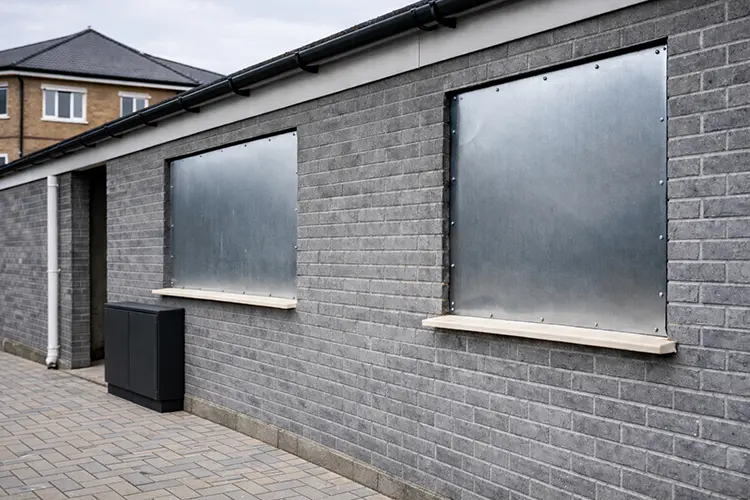
Steel Screens, Boarding & Access Control: Physical Security Explained

Steel-Screens,-Physical-Security-Explained

When a property becomes vacant, physical security is the first and most visible line of defence.
Yet many owners still rely on basic plywood boarding or temporary padlocks. These options often fail insurer requirements and can attract, rather than deter, criminal attention.

This guide explains the differences between steel security screens, traditional boarding, and modern access control, and why insurers increasingly expect professional, tamper-resistant solutions on vacant buildings.

Why Physical Security Matters for Vacant Properties

Vacant buildings send a signal. If a site looks weakly protected, criminals assume:

  • Entry will be easy
  • Damage will go unnoticed for longer
  • No one is monitoring activity
  • The owner is not actively managing risk

Effective physical security must do three things:

  • Prevent forced entry
  • Visibly deter intrusion
  • Demonstrate compliance to insurers

Traditional Boarding: Why Plywood Is No Longer Enough

Timber boarding has long been used to secure empty properties, but it has major weaknesses.

Problems with plywood boarding:

  • Easily forced or cut
  • Attracts attention, as if something valuable is hidden
  • Quickly degrades in bad weather
  • Offers little resistance to tools
  • Often rejected by insurers for commercial sites

Plywood can also create additional problems:

  • Moisture retention that leads to mould
  • Heightened fire risk
  • Damage to window frames when removed

📌 Most insurers now consider timber boarding a temporary, last-resort measure.

What Are Steel Security Screens?

Steel security screens are purpose-designed panels fixed internally or externally over vulnerable access points.

Typical features include:

  • Heavy-gauge galvanised or powder-coated steel
  • Anti-tamper fixings
  • Ventilation slots to reduce damp
  • Non-damaging fixing methods that preserve frames
  • Quick-release systems for authorised access

They are widely used on:

  • Vacant homes
  • Empty retail units
  • Industrial buildings
  • Public sector assets
  • Redevelopment sites

Steel Screens vs Plywood Boarding

FeatureSteel ScreensPlywood Boarding
Forced entry resistance✔ High❌ Low
Insurance acceptance✔ Preferred❌ Often rejected
Fire resistance✔ Non-combustible❌ Combustible
Visual deterrence✔ Strong❌ Attracts attention
Ventilation✔ Built-in❌ None
Reusability✔ Yes❌ No
Long-term use✔ Suitable❌ Short-term only

📌 Steel screens are not just stronger. They also support compliance.

Steel Security Doors & Controlled Access

Windows are not the only risk. Doors, especially rear, service, and fire exits, are common entry points.

Steel security doors provide:

  • Reinforced door leaves
  • Anti-jemmy frames
  • High-security locking systems
  • Internal override for authorised entry
  • Compatibility with alarms and CCTV

Access control benefits:

  • ✔ Allows contractors or agents entry
  • ✔ Prevents lock damage from repeated boarding removal
  • ✔ Enables audit trails that show who accessed the site and when

This matters most for:

  • Long-term voids
  • Redevelopment projects
  • Commercial units with frequent inspections

Related article: Site security during redevelopment phases

What Insurers Expect From Physical Security

While requirements vary, insurers commonly expect:

  • ✔ Steel screens or steel doors on accessible openings
  • ✔ Anti-tamper fixings
  • ✔ No broken glazing left exposed
  • ✔ Controlled access for inspections
  • ✔ Proof of installation and maintenance

For higher-risk sites, insurers may specify:

  • LPS 1175-rated products
  • Additional alarms or CCTV
  • Weekly inspection evidence

Related article: Vacant property insurance requirements

Anti-Tamper & Safety Features That Matter

Quality steel systems include:

  • Concealed fixings
  • Internal release mechanisms
  • Fire-safe design
  • Emergency egress compliance where required
  • Ventilation to reduce condensation
  • Non-invasive mounting to protect property value

Poor-quality systems may:

  • Damage frames
  • Breach fire regulations
  • Create condensation problems
  • Be rejected by insurers

📌 Professional specification matters.

Physical Security Alone Is Not Enough

Steel screens prevent entry. They do not:

  • ❌ Detect attempts
  • ❌ Record evidence
  • ❌ Alert authorities

Insurers and risk assessors therefore recommend combining physical measures with active monitoring.

Best-practice combinations:

  • Steel screens plus CCTV towers
  • Steel doors plus alarms
  • Access control plus inspection logs
  • Physical barriers plus environmental sensors

Related articles: CCTV towers vs traditional guarding, Environmental monitoring in vacant property

Use Cases: Where Steel Screens Are Essential

Residential Voids

  • Prevent squatting
  • Maintain insurance cover
  • Protect from vandalism

Commercial Units

  • Deter metal theft
  • Protect HVAC and plant
  • Meet insurer and leaseholder requirements

Redevelopment Sites

  • Secure buildings between phases
  • Allow contractor access without damage
  • Enable phased security upgrades

Public Sector & Heritage Assets

  • Avoid reputational damage
  • Comply with safety regulations
  • Protect irreplaceable features

Related article: How vacant properties are secured within the public sector

Cost vs Consequence: Why Steel Screens Save Money

While steel screens cost more upfront than plywood, they typically:

  • Reduce break-ins
  • Prevent squatting
  • Avoid repeated boarding costs
  • Lower insurance risk
  • Reduce guarding requirements
  • Preserve building condition

📌 One prevented incident often pays for the screens.

Final Thought: Physical Security Signals Control

A properly secured vacant property sends a clear message: this site is managed, monitored, and protected. Criminals move on. Insurers stay satisfied. Owners protect value.

Secure Your Vacant Property Properly

We supply and install:

  • ✔ Insurance-approved steel security screens
  • ✔ Steel access doors with controlled entry
  • ✔ Non-damaging fixing systems
  • ✔ Rapid deployment nationwide
  • ✔ Integrated monitoring solutions

Request a physical security assessment, contact us

Our Quick Quote Request

Simply complete our quick survey below

Step 1
Step 2
Step 3
Submit
Select a Property Type*

If your property is not a commercial property, please call us on 02380 000 400

Select your Services*
Are you looking to upgrade an existing system, or install a new one?
Make an enquiry