

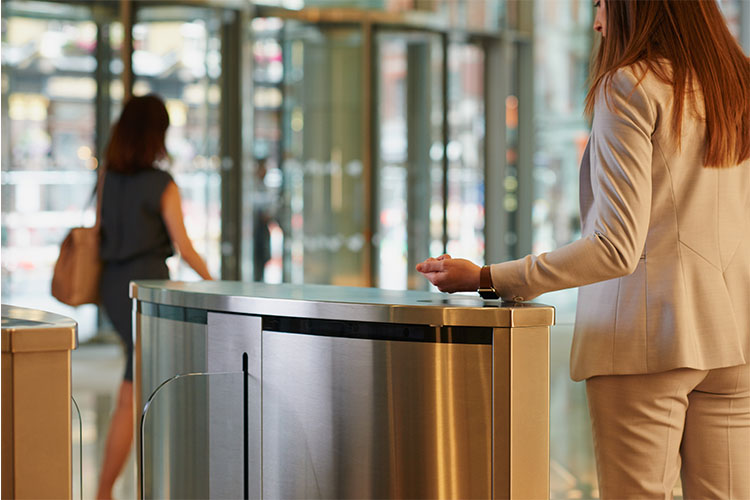
Access control systems are security solutions designed to regulate who can enter a building, room, or digital system based on verified permissions. They ensure that only authorised individuals gain access—protecting people, property, and sensitive information.
Every organisation, from small businesses to major enterprises, faces the risk of unwanted entry. Sometimes it’s an ex-employee who still has a key. Sometimes it’s a visitor who walks into a restricted zone unnoticed. Modern threats don’t always involve force—often, they exploit weak or outdated access management.
A properly deployed access control system eliminates those gaps by defining who is allowed in, when they can access, and where they are permitted to go.
Access control is the process of managing and verifying entry into physical or digital spaces. It ensures only approved users can get through designated “gates,” whether that gate is a locked office door or a secure cloud platform.
A house key is a basic form of access control. But as soon as you have:
Access control isn’t just about locking doors—it’s about risk management. A strong system:
✔ Prevents unauthorised entry
Stops outsiders, ex-employees, and unverified visitors.
✔ Reduces internal security risks
Employees only access areas required for their job role.
✔ Creates full access logs
You can see exactly who entered, when, and through which door.
✔ Protects high-security locations
Server rooms, labs, finance offices, and data storage areas require elevated protection.
✔ Helps meet legal and industry compliance
Healthcare, finance, government, and manufacturing often require regulated access management under standards like ISO 27001, HIPAA, PCI-DSS, etc.
If security is an afterthought, a breach is already in motion.
Access control turns protection into a proactive system—not a guess.
A true access control solution isn’t just a keypad on a door. It includes:
Devices that authenticate each credential (RFID readers, PIN pads, biometric scanners)
The system “brain” that approves or denies entry
Magnetic locks, smart locks, turnstiles, automatic gates
Sets permissions, generates reports, stores access logs, and centralises control
Without these working together, you don’t have an access system—you just have a locked door.
Protect physical spaces such as:
Common examples include:
Protect digital assets such as:
Examples include:
Most modern organisations need both physical and logical access control working together for full security protection.
✔ Offices and corporate buildings
✔ Schools and universities
✔ Healthcare facilities
✔ Industrial and manufacturing sites
✔ Retail and hospitality spaces
✔ Government and critical infrastructure
If you have people, assets, or data worth protecting, access control is essential—not optional.
Quick Comparison Table
| Feature | Basic Locks | Modern Access Control |
|---|---|---|
| Track who enters | ❌ No | ✔ Yes |
| Revoke access remotely | ❌ No | ✔ Yes |
| Scalable to multiple doors | ❌ No | ✔ Yes |
| Audit compliance ready | ❌ No | ✔ Yes |
Access control systems allow you to manage who can access what—and protect your site from risk before it becomes a problem. Whether you’re securing one entrance or an entire organisation, a properly designed system provides safety, compliance, and peace of mind.
When access is controlled, security becomes effortless.
When it isn’t, you’re relying on luck instead of strategy.

Head Office
18-20 Millbrook Road East,
Southampton, Hampshire, SO15 1HY
Tel: 0800 799 9800
Email: info@veritech-security.com
Hours: Monday - Sunday: Open 24 Hours

Simply complete our quick survey below
