When it comes to physical security, few sites can match the stringent measures implemented by some of the most protected facilities in the world. From safeguarding national treasures to ensuring government continuity, these locations set the global standard for layered, effective protection. Whether you’re securing a business, managing access to a restricted area, or protecting high-value assets, there’s a lot to learn from their systems.
Here are eight of the most secure places on Earth — and what makes them virtually impenetrable.
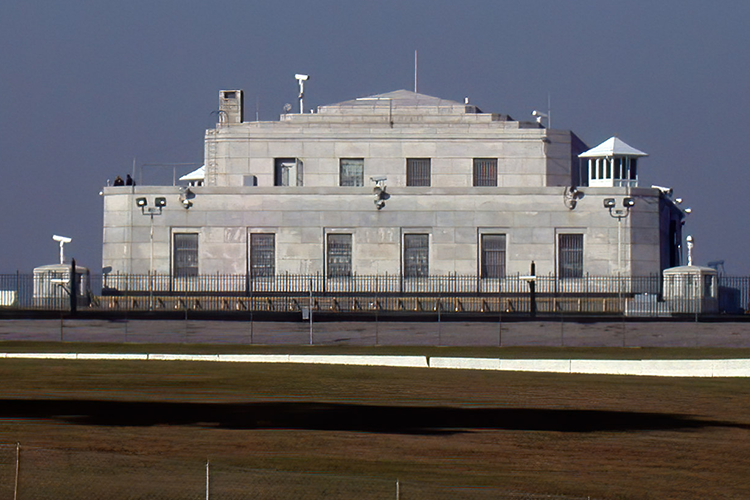
Purpose: U.S. Bullion Depository
Security Lessons: Layered protection, armed presence, and fortified construction
Home to America’s monetary assets, Fort Knox is renowned for being one of the most secure places on Earth. It is said that around 5,000 tons of gold are housed here (that’s almost 2 percent of all gold on Earth!). To ensure it is completely safe, there is a bank vault hidden deep within a basement of the depository that has a 250-ton door at its entrance. If that wasn’t enough, the entire location is surrounded by a military camp to ward off any intruders.
Security takeaway: Combining layered access controls with manned guarding services ensures strong perimeter and personnel-based defense.
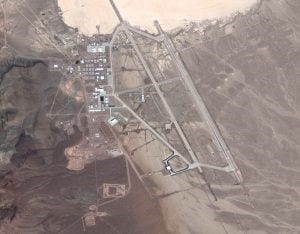
Purpose: Classified military testing and aerospace research
Security Lessons: Surveillance tech, motion detection, and restricted access
You’ve probably heard of Area 51, the high-security military research facility that’s famed for housing some of the world’s biggest secrets and coverups – and, to some, it’s known for concealing information on aliens and UFO sightings. Of course, we’ll probably never know because the level of security here is so high that what’s going on inside remains a total mystery. Motion sensors and patrols of armed guards are in constant use, always on the lookout for invasive forces. It’s so secure this is the best picture you can get!
Modern application: Real-time monitoring paired with access control system installation helps secure sensitive areas from unauthorised access.
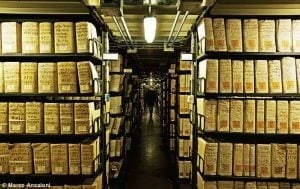
Purpose: Protection of centuries-old religious documents
Security Lessons: Controlled access, environment regulation, archival resilience
The Vatican is home to some of the most sacred and important religious documents and ledgers in history. There is an estimated 35,000 volumes of information on the Roman Catholic Church kept in a separate, secret building that’s not part of the Vatican Library. Ownership of this information is passed down from Pope to Pope, and it’s one of the most secret, mysterious places on Earth – very few photos of the building exists too.
To secure data-rich environments, integrate commercial CCTV installation with digital access tracking and environmental sensors.
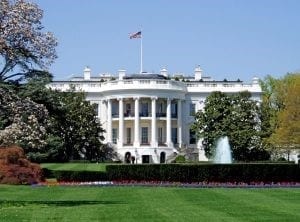
Purpose: Executive operations and residential quarters of the U.S. President
Security Lessons: Hardened infrastructure, restricted zones, 24/7 protection
18 acres of highly secure, protected land, The White House is the home of the President of the United States, staff members and other key officials and delegates. It remains one of the most heavily guarded buildings in the world, fit with an iron fence that envelopes the entire premises, bulletproof windows and well as a special secret service detail devoted to protecting the First Family at all times and at all costs.
Our corporate security services provide personnel and planning for executive-level protection.
Consider pairing this with robust perimeter security systems to secure your facility’s boundaries.
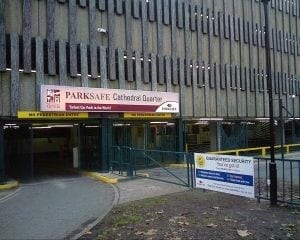
Purpose: Public parking with advanced security protocols
Security Lessons: Automation, smart surveillance, and instant lockdown features
We’re moving across the pond to Bold Lane – a street in the English county of Derbyshire. This location is known for having the world’s most secure multi-storey car park. Built in the 1970s, it’s open 24 hours a day and has 440 parking spots that are protected with individual barcodes, sensors and other high-tech security equipment – the barriers also come down if security is breached. The security measures were introduced in the 90s after the car park become a popular location for crime and drug use.
For large sites or urban properties, consider combining mobile security patrols with automated detection systems to preempt and respond to threats rapidly.
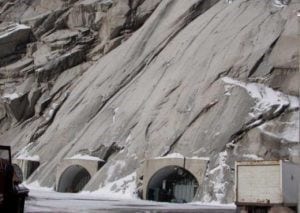
Purpose: Long-term preservation of genealogical and historical records
Security Lessons: Disaster resilience, digital redundancy, secure archiving
Owned by the Church of Jesus Christ of Latter Day Saints, this building is home to the largest archive of genealogical records and historical information – approximately 3 billion pages of family history! The building is based inside the Granite Mountain in Utah, and the atmosphere is climate controlled to ensure the documents remain preserved.
High-value archives benefit from advanced commercial CCTV installation and backup power systems for 24/7 coverage and long-term document preservation.
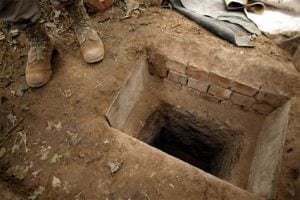
Purpose: Protection of military and political leadership during wartime
Security Lessons: Underground location, structural fortification, emergency exits
It’s not known just how many rooms the bunker had, but the main room did have impressive 60-foot high ceilings! The building was designed to protect Saddam Hussein in the event of a military attack, withstand the blast of a nuclear bomb, and had room for about 50 people. Located nearly 100 feet underground, the bunker was the epitome of security – three-ton Swiss-made doors, 5 foot thick walls, 6 foot thick reinforced concrete ceiling and two escape tunnels. It withstood several US attacks, including bunker busters and 20 cruise missiles.
Similar hardened measures are increasingly used in construction site security services, where restricted access and asset protection are paramount during high-risk builds.
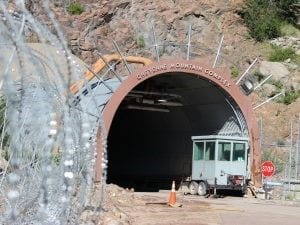
Purpose: North American Aerospace Defense Command (NORAD)
Security Lessons: Nuclear blast resistance, autonomous systems, underground positioning
Home to a number of government organisations, the Cheyenne Mountain Complex is the intelligence, command and control centre for the United States Space Command missions and the North American Aerospace Defense Command (NORAD). Built during the Cold War, this high-security facility features super-strength blast doors. Don’t know what a blast door is? It’s a huge door built to protect against a nuclear blast. These particular doors can survive a multi-megaton nuclear detonation and each door weighs 25 tons.
In high-risk environments, pairing human teams with K9 security units adds a unique layer of threat detection.
While your organization may not need nuclear-blast-proof doors, the core principles behind these secure facilities — deterrence, early detection, strong access control, and trained personnel — are applicable to businesses, public venues, and construction sites alike.
Whether you manage a logistics hub, corporate office, or high-risk location, we can help you build a layered security strategy tailored to your needs.

Head Office
18-20 Millbrook Road East,
Southampton, Hampshire, SO15 1HY
Tel: 0800 799 9800
Email: info@veritech-security.com
Hours: Monday - Sunday: Open 24 Hours

Simply complete our quick survey below
