

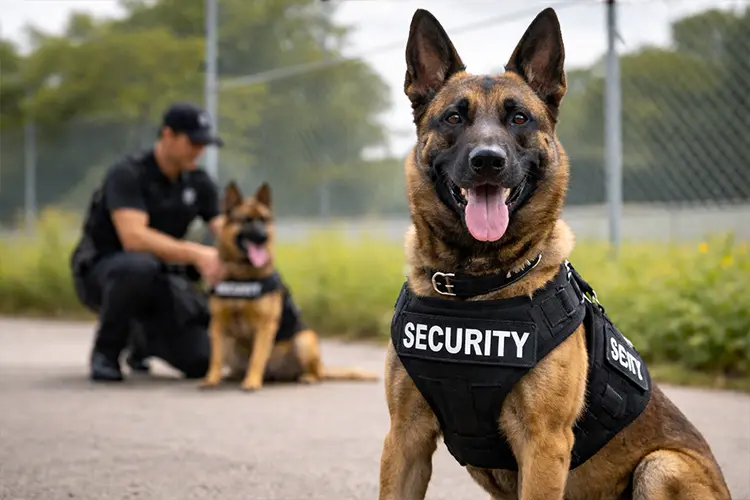
Animal welfare is not a peripheral concern in K9 security — it is central to it. A security dog that is poorly housed, inadequately exercised, transported in unsuitable conditions, or worked beyond its capacity will not perform reliably in the field. The dogs that deter intruders, conduct effective patrols, and respond to threats with confidence and control are, without exception, dogs that are well-cared-for.
For procurement teams, welfare standards are also a risk and reputational issue. If a provider cuts corners on animal welfare and an incident occurs — a welfare enforcement visit, a complaint, or adverse publicity — that reflects on the client organisations who engaged them. Understanding what responsible welfare looks like is therefore both an operational and a due diligence consideration.
Security dogs in the UK are governed by a combination of animal welfare legislation and professional standards. The key legislative framework includes:
The Animal Welfare Act 2006 is the overarching framework. It establishes five welfare needs that must be met for any animal in captivity or under human care: suitable environment, suitable diet, ability to exhibit normal behaviour, appropriate social interaction, and protection from pain, suffering, injury, and disease. A responsible K9 security provider structures its welfare protocols around these principles.
Security dogs typically live with their allocated handlers rather than in a company kennel facility. This arrangement is operationally preferable — dogs form their primary working bond with their handler, and that bond is strongest when the relationship is continuous rather than confined to working hours.
Where centralised kennelling is used, the facilities must meet the requirements of the Animal Welfare Act 2006 and any applicable local authority licensing conditions. BS 8517 specifies that kennelling must provide adequate space, appropriate temperature, clean bedding, and regular human interaction.
Some providers maintain secure on-site welfare facilities for dogs that require temporary housing — for example, seized animals requiring temporary care. These facilities require local authority registration under animal welfare licensing legislation and represent a significant commitment to responsible canine care.
The transport of security dogs is governed by both animal welfare legislation and professional standards. BS 8517 specifies that dogs must be transported in purpose-designed, ventilated crates that provide adequate space for the dog to stand, turn, and lie down comfortably.
Air-conditioned transport is the standard for responsible providers. Canine heat stress is a serious risk during summer months, and vehicles without climate control create unacceptable welfare risk. Nationally accredited crates designed for secure, comfortable dog transport should be used for all deployments.
Like human security officers, security dogs have limits on the hours they can work effectively. BS 8517 provides guidance on deployment durations, rest requirements, and the conditions under which dogs should not be deployed — extreme cold, excessive heat, and scenarios that exceed the dog’s conditioning.
Responsible providers monitor working patterns and rotate dogs appropriately. A dog that is routinely worked to exhaustion will eventually become unreliable, and the progressive deterioration in performance may not be immediately apparent. Regular operational assessments are necessary to maintain standards over time.
Security dogs require routine veterinary care — regular health checks, vaccinations, parasite control, dental care, and prompt treatment of any injury or illness. Responsible providers maintain up-to-date veterinary records for each dog and have clear protocols for responding to health concerns that arise during operations.
Dogs that are injured or unwell must not be deployed. This sounds obvious, but commercial pressure can create incentives to field dogs before they are fully recovered. A provider with robust health monitoring protocols and clear policies about fit-for-deployment standards demonstrates that welfare is not compromised by operational demands.
Welfare for working dogs is not only physical. Dogs are cognitively active animals that require mental stimulation as well as physical exercise. Regular training exercises, varied patrol routes, and ongoing handler engagement contribute to a dog’s mental wellbeing and maintain the working relationship that underlies operational performance.
Providers who invest in ongoing training — beyond the minimum required to maintain qualifications — typically produce better-performing dogs and longer working careers for their animals.
When evaluating K9 security providers, welfare standards should be a formal part of the assessment process. Specifically, procurement teams should ask for:
A provider who can supply this documentation transparently and promptly is demonstrating that welfare is embedded in their operations, not treated as a box-ticking exercise.
Veritech’s welfare standards are not a marketing position — they are evidenced in our operating procedures, our local authority registration, and our partnership with Animal Welfare Officers in Southampton. Every dog in our operation lives with its dedicated handler, is transported in nationally accredited crates, receives regular veterinary care, and is deployed in compliance with BS 8517 welfare requirements.
When you engage Veritech, you are not taking our word for it. We can supply welfare documentation, registration confirmation, and deployment protocols that demonstrate compliance in writing.
Call: 0800 799 9800 (available 24/7) Email: info@veritech-security.com Or request a consultation online.
Veritech Security is registered with Southampton’s local authority and works in partnership with Animal Welfare Officers. Our welfare protocols fully comply with BS 8517, and every dog lives with its dedicated handler. Contact us to learn more about our approach.
Related Articles

Head Office
18-20 Millbrook Road East,
Southampton, Hampshire, SO15 1HY
Tel: 0800 799 9800
Email: info@veritech-security.com
Hours: Monday - Sunday: Open 24 Hours

© 2026 Veritech Security is a trading name of Veritech Systems Limited | Company Registration No. 07095234 | Social Responsibility Policy | Sitemap | Privacy Policy | Policies and Procedures | Veritech Systems Limited holds SIA approved contractor status for Security Guarding, CCTV and Keyholding security services.
Simply complete our quick survey below
