

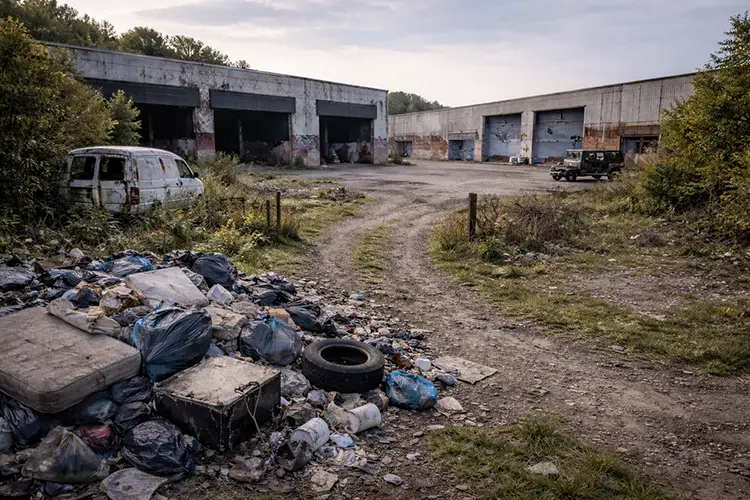
Many owners assume an empty building is the biggest security concern. In reality, vacant land and remote sites can be just as costly to protect, and sometimes even more vulnerable.
With no occupants, no neighbours, little footfall, and limited lighting, remote land becomes an easy target for fly-tipping, poaching, theft, illegal camps, vehicle stripping, and industrial-scale waste dumping.
The worst part? Land is often left unsecured because the owner assumes the risk is low. Problems then turn into legal and financial headaches.
This guide breaks down the real risks affecting remote land and isolated sites, explains a landlord’s legal responsibilities, and shows how modern off-grid security prevents losses.
Remote land can seem invisible to the public. With no regular surveillance or daily activity:
Because land is not locked like a building, access appears easy and unlikely to be challenged.
Days or weeks can pass before a landowner discovers the problem. By then, waste may have spread, theft may have escalated, or environmental damage may have occurred.
Fly-tipping costs UK landowners millions every year. Private land is especially vulnerable because councils will not remove waste dumped on private property.
Owners become responsible for:
Typical costs
| Waste Type | Approx. Removal |
| Household waste | £200–£1,000 |
| Tyres, furniture, appliances | £500–£2,500 |
| Industrial and commercial waste | £1,000–£20,000+ |
| Hazardous waste, such as chemicals or asbestos | £5,000–£100,000+ |
For remote estates, farmland, quarries, and industrial sites, a single fly-tipping event can lead to environmental prosecution if not cleared promptly.
Poaching is not always a lone hunter with a rifle. Increasingly, it involves:
Losses go beyond livestock or game. Poachers often cause:
Repeated offences erode land value and reputation for estates, farms, reserves, and country parks.
Vacant land often contains high-value assets, even without buildings:
Organised criminals can strip metal and remove equipment within minutes, especially when access roads are unmonitored.
Related article: Securing empty commercial units
When trespassers or traveller groups enter land, removal may require:
Landowners can be held liable if someone is injured on their land, even a trespasser, unless reasonable security steps were taken. As with squatting in buildings, prevention is cheaper than eviction.
Related article: Squatter prevention & legal responsibilities
What starts as a single entry can escalate into recurring crime:
| Stage | Risk |
| Access without barrier | Fly-tipping and trespass |
| Repeat visits | Larger waste loads, poaching |
| Word spreads | Organised criminal activity |
| Criminal damage | Fences, crops, livestock harmed |
| Litigation or fines | Environmental contamination |
Small sites can lose thousands per incident. Large estates can face six-figure remediation costs, especially if hazardous waste enters soil or water.
Landowners have a duty of care to keep land reasonably safe, including steps to reduce hazards that could harm trespassers. Priorities include:
If hazardous waste remains on land, councils and the Environment Agency can issue enforcement notices that compel immediate cleanup, impose fines, and pursue legal action. In short, owners can be penalised for failing to prevent crime.
Vacant land cannot be protected by a standard alarm. There are no walls or doors, and many sites have no power. Security should be off-grid, highly visible, and designed to deter.
Ideal for remote land with no utilities. Benefits:
Related article: CCTV towers vs Traditional guarding
Stopping vehicles is the single biggest deterrent to fly-tippers, thieves, and illegal groups. Options include:
Once vehicle access is restricted, fly-tipping and poaching typically drop sharply.
Infrared and AI-enabled detectors can identify:
Alerts go to a monitoring team for evidence gathering and rapid escalation.
Just like vacant buildings, land should be inspected and documented to avoid liability and insurance disputes.
Minimum frequency
Visible signs deter opportunists and support swift enforcement.
Remote land carries real value:
Criminals see these values too. Security protects land value just as much as buildings. Proper land protection is an investment, not a cost.
Our solutions secure remote and off-grid locations:
Request a free risk assessment, contact us

Head Office
18-20 Millbrook Road East,
Southampton, Hampshire, SO15 1HY
Tel: 0800 799 9800
Email: info@veritech-security.com
Hours: Monday - Sunday: Open 24 Hours

© 2026 Veritech Security is a trading name of Veritech Systems Limited | Company Registration No. 07095234 | Social Responsibility Policy | Sitemap | Privacy Policy | Policies and Procedures | Veritech Systems Limited holds SIA approved contractor status for Security Guarding, CCTV and Keyholding security services.
Simply complete our quick survey below
