

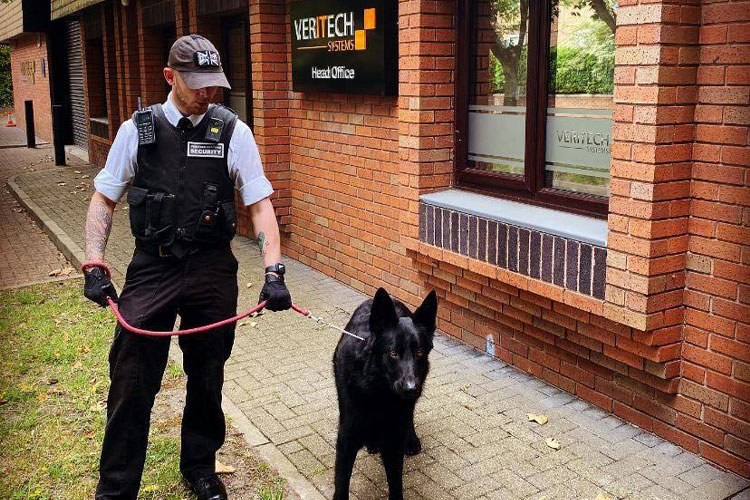
When you’re investing in manned security, you’re not just paying for someone to stand at your entrance. You’re investing in protection, risk mitigation, and peace of mind. But how do you know if you’re getting professional-grade security or just a warm body filling a shift?
The difference between adequate security and exceptional security lies in the standards and practices your provider follows. This guide reveals what truly professional manned guarding looks like—so you can evaluate potential providers and ensure you’re getting value for your investment.
Ineffective security doesn’t just fail to prevent incidents—it can actively create problems:
Professional security operations deliver measurable results:
The question isn’t whether you can afford professional security standards—it’s whether you can afford to operate without them.
What poor practice looks like: Guards walking identical routes at identical times, scanning checkpoint tags without actually inspecting anything, treating patrols as box-ticking exercises.
What professional practice looks like:
Unpredictable patrol patterns that prevent criminals from timing their attempts. Professional guards vary their routes, timings, and directions—creating uncertainty that deters opportunistic crime.
Systematic observation using all senses: Looking for visual anomalies (doors ajar, unfamiliar vehicles, items out of place), listening for unusual sounds (breaking glass, alarms, unexpected voices), and even detecting odours that signal problems (smoke, gas leaks, chemical spills).
Thorough checkpoint inspections that go beyond tag-scanning. At each checkpoint, professional guards actually inspect doors, windows, lighting, and potential hazards—standing still to observe and listen rather than rushing through.
Immediate documentation of everything unusual. Professional guards document observations during patrols while details are fresh, with timestamped photos and GPS coordinates that prove what was found, where, and when.
Questions to ask your provider:
What poor practice looks like: Guards waving people through without proper verification, failing to challenge tailgating, or inconsistently applying security protocols depending on who’s entering.
What professional practice looks like:
Every person verified every time: Professional guards check photo ID badges against faces, verify expiry dates, and confirm appointments for visitors—with no exceptions based on familiarity or appearance.
Active tailgating prevention: Guards watch for unauthorised persons following authorised ones through access points, using a combination of physical barriers, anti-tailgating sensors, and vigilant observation.
Professional challenge procedures when something’s wrong. Guards approach calmly, identify themselves clearly, state what they’ve observed objectively, and request verification—all while maintaining safety and professionalism.
Visitor management protocols: All visitors logged with names, times, purpose, and host contact details. Temporary passes issued. Escorts provided for restricted areas.
Complete documentation: Records of denied entry, badge issues, tailgating incidents, and access violations that create audit trails and identify patterns.
Questions to ask your provider:
What poor practice looks like: Delayed responses, guards unsure of procedures, contaminated evidence, poor communication with emergency services, and incomplete documentation that undermines investigations.
What professional practice looks like:
Rapid, structured response following proven frameworks: Recognize the incident early, Evaluate the situation quickly, Act appropriately, Communicate with all stakeholders, and Track everything through thorough documentation.
Clear priorities that protect people first (life safety above all), ensure guard safety (guards can’t help if injured), minimise property damage, and preserve evidence for investigations.
Proper evidence handling: Professional guards know not to contaminate crime scenes, how to secure CCTV footage properly, how to document witness information, and how to maintain chain of custody for all evidence.
Effective emergency services coordination: Guards who can clearly communicate with 999 operators, meet emergency services to guide them quickly to incidents, and provide complete handovers with relevant information.
Comprehensive incident documentation completed within hours of incidents (not days), including chronological narratives, witness details, photographic evidence, emergency services information, and follow-up action plans.
Real-world example: A Birmingham distribution warehouse guard noticed a vehicle parked in an unusual location at 2:30am and a loading bay door with an 8cm gap that should have been flush. Rather than assuming “probably maintenance,” the guard photographed both, logged observations immediately, called the supervisor, and monitored from a safe distance. Police arrived and arrested three suspects loading £87,000 of electronics. The guard’s detailed documentation and evidence preservation led to successful prosecution.
Questions to ask your provider:
How do you train guards in evidence preservation?a—30-90 day retention unless related to incident (then 6 years).
What incident response framework do your guards follow?
How quickly are incident reports typically completed?
Can I see examples of incident reports your team has produced?
What poor practice looks like: Guards who struggle to de-escalate conflicts, communicate poorly with clients and emergency services, or fail to maintain professionalism under pressure.
What professional practice looks like:
Verbal de-escalation skills that prevent situations from becoming violent: Calm tone and body language, active listening that makes people feel heard, empathy without agreement, clear boundaries delivered professionally, and options that give people a sense of control.
Clear, concise radio communication using plain language, phonetic alphabet for spelling, and brief transmissions that don’t tie up shared channels.
Effective emergency services communication: Guards who provide structured 999 calls with exact locations, clear situation descriptions, hazard information, and who stay on the line to follow operator instructions.
Professional customer service: Guards are often the first point of contact with your organisation. Professional guards greet warmly, help willingly, and maintain positive interactions even when delivering unwelcome news.
Real-world example: At a Manchester shopping centre, a guard noticed two customers in a heated argument escalating toward physical confrontation. The guard approached calmly, positioned between them as a physical barrier, used active listening to let each person state their grievance, validated their frustrations without taking sides, and offered options. Both individuals calmed within 5 minutes, apologised, and continued shopping separately—preventing violence, injuries, and potential legal liability.
Questions to ask your provider:
What communication protocols do guards follow?
How are guards trained in de-escalation techniques?
Can you provide examples of conflict situations guards have successfully resolved?
What poor practice looks like: Guards receiving only minimum SIA training with no refreshers, outdated knowledge of legal requirements, and no investment in professional development.
What professional practice looks like:
Comprehensive initial training beyond basic SIA requirements: Site-specific induction covering your layout and procedures, equipment training for your systems, emergency procedure rehearsals, and legal compliance updates.
Regular ongoing training including annual first aid refreshers, de-escalation technique practice through role-playing scenarios, legal and regulatory updates, technology training for new systems, and equality/diversity/GDPR compliance.
Individual development plans for each guard: Regular assessments identifying strengths and development areas, SMART goals (Specific, Measurable, Achievable, Relevant, Time-bound), tailored training actions, and quarterly progress reviews.
Performance monitoring using key metrics: Checkpoint compliance rates (target: 95%+), incident response times (target: under 5 minutes on-site), report timeliness (target: 90%+ submitted within 2 hours), report quality scores, and client satisfaction ratings.
Industry benchmarks:
| Metric | Top-Tier Providers | Average | Poor Performers |
|---|---|---|---|
| Initial training hours | 40+ hours | 16-24 hours | <12 hours |
| Annual refresher training | 16+ hours | 8-12 hours | <8 hours |
| First Aid certified guards | 100% | 50-70% | <50% |
| Training budget (% of payroll) | 3-5% | 1-2% | <1% |
Questions to ask your provider:
Can you share client satisfaction scores and other performance metrics?
How many hours of initial and annual training do guards receive?
What percentage of guards hold current First Aid certification?
How do you monitor and improve individual guard performance?
Watch for these indicators when evaluating security providers:
❌ Unable or unwilling to share performance metrics
❌ Minimal training beyond basic SIA requirements
❌ High guard turnover rates
❌ Vague or generic answers about procedures
❌ Lack of technology integration
❌ No formal quality assurance program
❌ Resistance to providing references or case studies
At Veritech Security, professional standards aren’t marketing claims—they’re operational commitments we measure and continuously improve.
Comprehensive Training Program
Technology-Enhanced Operations
Rigorous Quality Assurance
Measurable Performance
Industry Recognition
Distribution Warehouse, Birmingham
Corporate Office Complex, London
Construction Site Network, UK-wide
Choosing a manned security provider is a significant decision with real implications for your safety, liability, and peace of mind. Don’t settle for the lowest quote—evaluate providers based on the standards and practices that deliver actual protection.
Professional security providers will answer these questions confidently with specific data. Vague responses or reluctance to share performance metrics are warning signs.
If you’re looking for manned security that goes beyond the basics—security that prevents incidents rather than just reacting to them—Veritech Security delivers proven results.
Free Security Assessment We’ll evaluate your site, identify vulnerabilities, and recommend a security solution tailored to your specific needs and risk profile.
Performance Guarantee We back our service with measurable commitments: checkpoint compliance rates, response time guarantees, and satisfaction scores—or we make it right.
Transparent Reporting Monthly performance reports with KPIs, incident summaries, and trend analysis so you always know exactly what you’re getting.
Contact Veritech Security:
Or complete our quick quote request form to receive a tailored proposal within 24 hours.
Next Article: Security Guards in Different Industries
Related Articles:
Professional security standards protect your people, property, and reputation. Choose a provider that proves their commitment through measurable performance, continuous training, and transparent accountability. Choose Veritech Security.

Head Office
18-20 Millbrook Road East,
Southampton, Hampshire, SO15 1HY
Tel: 0800 799 9800
Email: info@veritech-security.com
Hours: Monday - Sunday: Open 24 Hours

© 2026 Veritech Security is a trading name of Veritech Systems Limited | Company Registration No. 07095234 | Social Responsibility Policy | Sitemap | Privacy Policy | Policies and Procedures | Veritech Systems Limited holds SIA approved contractor status for Security Guarding, CCTV and Keyholding security services.
Simply complete our quick survey below
